
Whether the customer is right or not – that’s a debate for another day. But know that without customers, your business does not exist.
Long gone are the days when businesses could manipulate customers and at the same time, treat them as an afterthought.
No one really cared about what customers need or wants – let alone create an experience for customers or even bothered retaining them.
And that was it.
And if customers were not satisfied or didn’t even come back, that’s was no problem.
Businesses would just spend another huge money on advertising to attract more customers and use more sales promos to persuade people to buy.
Luckily, that’s not how business works anymore, nor should it.
For any business to succeed in today’s economy, you have to recognize and embrace the incredible power of understanding your customers’ problems.
Because the survival and growth your business depends on it.
Why focusing on the customer is everything.
The way we see customers started to change a few decades ago. And that way of thinking, also caused a huge change in how marketing is done today.
Back then, businesses had all the power and still wanted more by getting more market share.
Therefore, sales and more sales were the order of the day.
In fact, back in those days, marketing was all about advertising and how to increase sales. In other words, to sell and keep selling more to customers.
No one paid any attention to finding out what customers need or prefer; or, solving customers’ problems.
But then, something happened.
And all of sudden, businesses began to shift their focus to strategies that solves customers’ problems and build a relationship with them.
Now, you might be wondering, “what changed?”
What at all could make all those sales-focused businesses to forever shift their focus and start paying attention to their customers?
Well, the following are the reasons why.
1. power shift
One thing that anyone could easily find today is information.
Consumers back then didn’t have that.
People had less information about what they bought.
And any added information that they could find, usually came from salespeople and what they get in magazines, tv, radio and newspaper ads, etc.
That was how businesses mostly influenced consumers – businesses had the power.
But everything changed, thanks to technology.
It gave consumers easy and quick access to information and today, anyone could just:
- search information on any product and service,
- compare features and prices,
- decide where they want to shop,
- and control their spending,
- all in a matter of minutes.
What’s more, anyone could interact and share opinions and experiences on what they buy – all thanks to review sites, blogs, groups and communities on social media.
Today, businesses have no choice but to make sure they solve their customer’s problems and them a reason to buy from them and remain loyal.
2. advertising got expensive
Back then, everyone got their information from one or two places.
There were only a few magazines, newspapers; and tv and radio stations around.
Businesses would only make one ad; advertise it at one or two stations and reach lots of people – easy and affordable.
But then, a few decades ago, new media houses started popping up.
And unlike the old ones, these new houses didn’t serve everyone.
What they actually did was create unique and specific content for certain audience according to location, demographic or lifestyle.
It broke up mass media into different categories; changed where everyone got their information and also how businesses do advertising.
Since then, businesses have to spend more and advertise at different media houses to reach consumers.
3. more media fragments
Anyway, it’s not just mass media that keeps fragmenting but social media too.
Today, we have different social media sites that targets different and specific audiences.
What’s more, people don’t spend time online anymore just following anyone or interacting with just any content – they’re also specific.
They join specific online groups and communities, follow people and influencers who share their interests or hobbies.
People only engage with content that are relevant to them.
Today, you can’t find your audience let alone reach them with marketing messages if you don’t always focus on them.
In fact, some of the key things you need to know before you start marketing your small business on social media are:
- who your audience is
- where to find them
- who is influencing them
- and the kind of messages they’ll engage with.
4. a whole lot of choices
Technology has really improved lots of things in business over the last few decades.
Just look at how easy it is today to start a business, make products or services and do other things.
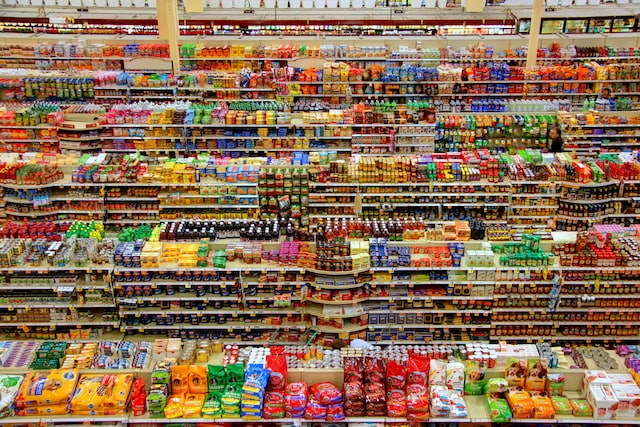
This also means there are more businesses today and more varieties and assortments of products and services out there than before.
Just imagine the countless choices in the soft drink aisles alone when you go grocery shopping. Or, the choices you get when you’re shopping online.
And it doesn’t stop there.
Technology has again made it easier for people to be exposed to all kinds of products, lifestyles and cultures across the world.
Also, it has made it easier to transport products and exchange money with lightning speed.
This means more choices and convenience for consumers.
And the only ONE who actually wins with all these advances in technology is the consumer.
Choices give consumers more power; but rather give businesses more competition to deal with.
And it’s not the normal competition that you’d get from that store across the street or the other two stores downtown.
Nope.
You now have competitors from every corner of the globe.
So, pay more attention to what solutions your customers need and want, and you’d have a chance of being their first choice.
4. changes in hassles
You and I buy products and services every day.
We don’t do it just for fun.
But we buy them to help get things done or solve a particular hassle or problem we might have.
We buy stuff to solve our hassles or problems – so we could survive and live as comfortably as we can in our environments.
Which means, if situations in our environment changes, then our hassles or problems would also change – which will then affect what we buy.
It forced a lot of businesses to rethink what they sell and how they operate. In the end, businesses which couldn’t keep up with the situation, had to close shop.
Take what happened during the COVID-19 pandemic for example.
A lot of businesses had to rethink how they operate and what they sell simply because the pandemic had changed peoples’ hassles and problems.
And businesses which couldn’t step up, had to close shop.
Situations are always changing; and anything at all could change your customers’ hassles and make them stop buying your products or services.
It could be a new technology or a cultural change or even some new law – or, the economy..
Like the recent high levels of inflation in the country which is making consumers change what they spend their money on.
You can’t keep up if don’t pay attention to your customers.
5. ever-changing tastes and preferences
Everyone is NOT the same.
We all have our own unique tastes and preferences.
And it’s what allow us to express ourselves, our lifestyle and our culture.
They make us feel like an individual but at the same time, also make us feel like we belong with a certain class or a way of life.
For that reason, our tastes and preferences play a huge role in what we spend our money on.
But the thing with taste and preference is that, they change all the time.
There’s always something new and exciting that everyone is going crazy about. Like a new cuisine or new fashion style or new device and so on.
Now, does that mean your business should also follow every latest trend or craze?
Not necessarily.
But paying attention to your customers allows you to:
- understand who and what influences their tastes and preferences,
- see any changes in their taste and preference
- and know how to market your products and business regardless of any new trend.
Wrapping it up
Business today is simply about what the customer is willing to pay for to solve their problems or satisfy their needs and wants – while you make profits.
Those are the only things that give your small business a reason to exist in today’s chaotic and highly competitive world of business.
It isn’t about how great you think your product is or how skillfully you could offer a service.
Without customers, you don’t have a business – harsh but true.
But then, by focusing on your customers, you give your small business a chance to survive and something to build your business on.
 Small To Sprout